

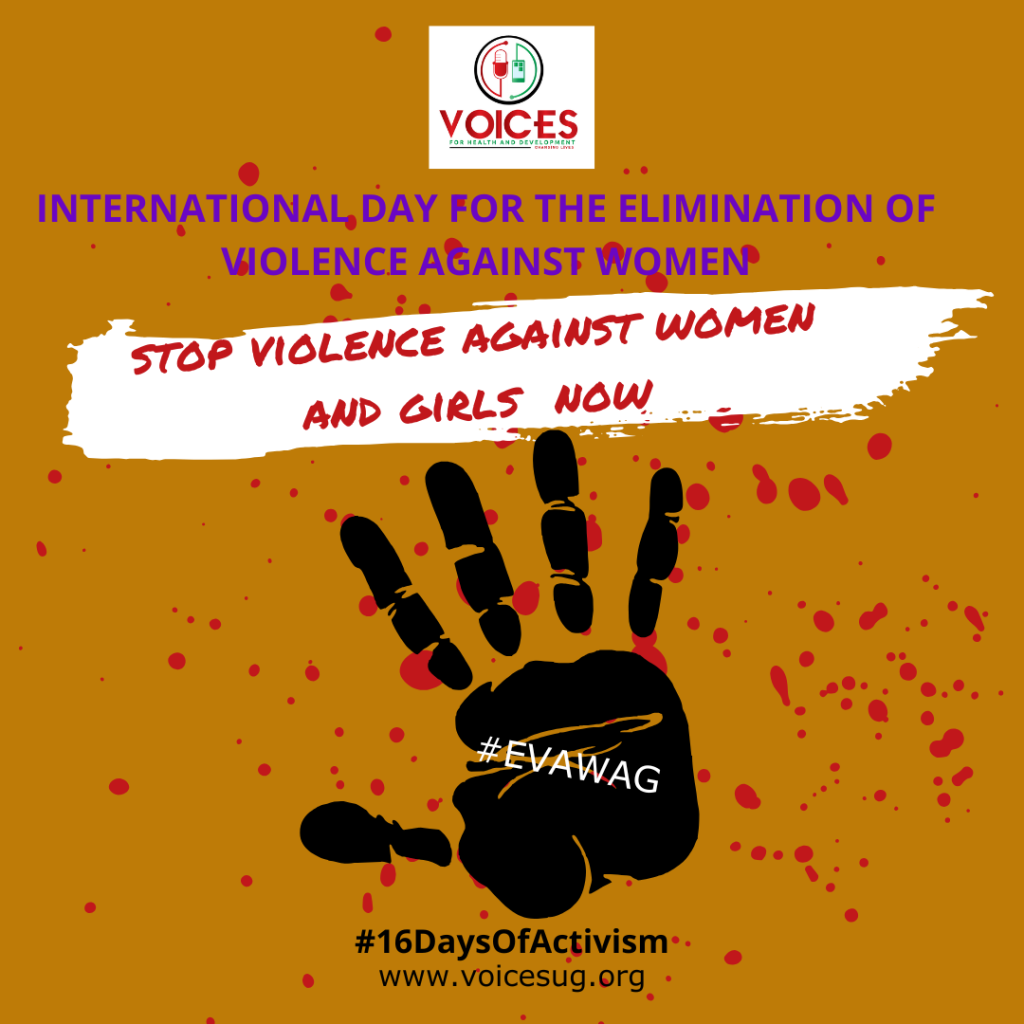
Every year, the world observes November 25th as the International Day for the Elimination of Violence Against Women and Girls, a global call to protect women’s dignity, safety and rights. This year’s theme “Unite to End Digital Violence Against Women and Girls” reminds us that violence does not only occur in physical spaces but also in the online environments where many girls increasingly live, learn and express themselves.
This day shines a spotlight on one of the most widespread and devastatiing human rights violations in the world; gender based violence. From domestic abuse and sexual assault to forced marriage and trafficking, violence against women and girls exist in every country and culture.
In Uganda, Gender-Based Violence (GBV) remains deeply complex. It is not limited to the physical acts that most people recognize. The 2019 National Policy on Eliminating GBV outlines its broad and deeply rooted manifestations, including physical violence, emotional violence, sexual violence and other forms of gender based harm. These forms of violence reflect systemic inequalities, harmful norms, and the normalization of women’s suffering.
Today, digital violence, a new and less visible frontier of violence is rising. It is equally destructive, taking forms of cyber harassment, non consensual sharing of intimate images, online stalking and technology facilitated abuse.
According to the 2023 Uganda Police Crime Report, the country recorded 15,184 domestic violence cases. Out of these, 10,792 were female adult victims, compared to 3,243 male adults. The impact extended to children too, with 644 girls and 505 boys listed among juvenile survivors.
These numbers are more than statistics, they represent the women and girls who bear the greatest burden.
In a research report by Women Of Uganda Network(WOUGNET) in collaboration with Makerere University School of Women and Gender studies in 2021, it revealed that 51% of GBV survivors(women) experienced psychological violence online, 36% experienced sexual violence online and 4% experienced economic violence online. All these were facilitated by the exposure of personal information online, limited legal support and male dominance of online spaces among other factors.
On this day, we reaffirm our commitment to ensuring that girls do not navigate these Gender based violences alone. We shall speak up with them, work to reform systems, challenge discriminatory norms and ensure that every girl lives free from violence.
When we protect girls, we protect the future.
