

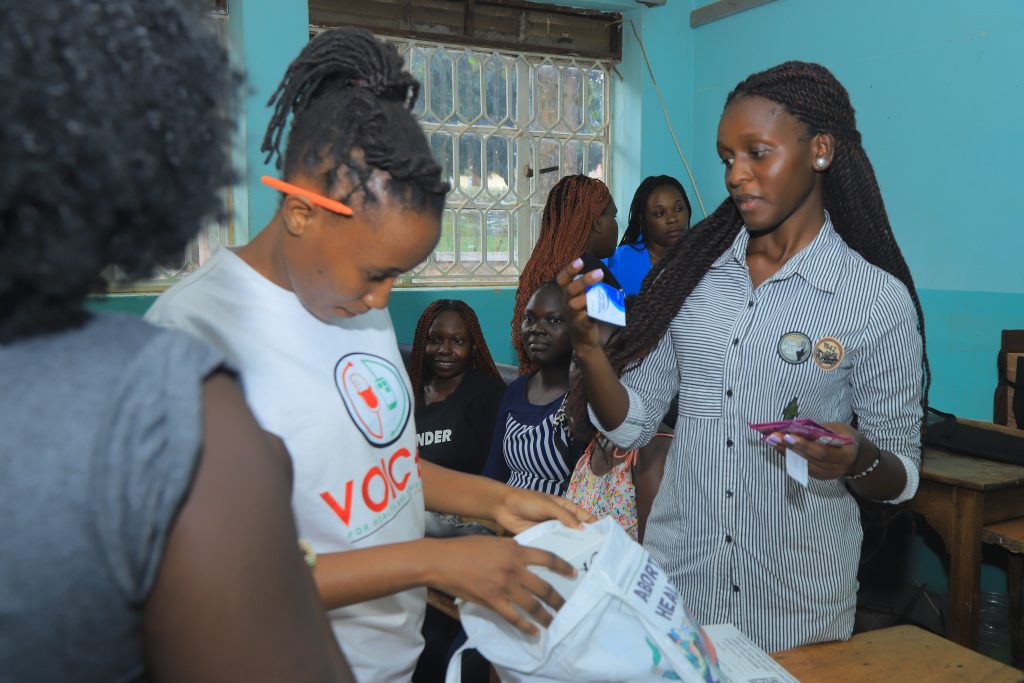
At one of our Info Cafes engaging female university students, a simple interaction turned into a powerful learning moment.
During the session, Oliver, a student, noticed a lubricant displayed at our table. It was the first time she had seen such a product, and rather than ignore her curiosity, she approached our medical team with open questions. Oliver wanted to know what it was for, how it worked, and why someone might use it. What followed was not just an exchange about a product but a safe, respectful conversation on sexual and reproductive health, free from embarrassment or judgment.
Our Medical team member listened attentively and explained clearly, responding to every question with patience. The result was a moment of empowerment. Oliver left with accurate information, having replaced uncertainty with understanding.
This moment reflects a broader challenge in Uganda: despite widespread exposure to sexual activity among young people, comprehensive sexual and reproductive health education and services remain limited. More than 60% of sexually active girls aged 15–19 in Uganda have an unmet need for modern contraception, and approximately half of all pregnancies in this age group are unintended each year.
Data also shows that many young people engage in sexual activity without consistent condom use, leaving them vulnerable to sexually transmitted infections (STIs), including HIV, and unintended pregnancies.
These statistics show why conversations like the one Oliver had matter. When young women are given safe spaces to ask questions and access information, they are more likely to make informed decisions about their bodies and health.
We believe no question is too small or too awkward when it comes to girls’ health and dignity. By creating supportive environments on campus and beyond, we are not just sharing facts—we are promoting agency, confidence, and well-being among girls.
